Cracks or gaps that keep returning along the center of a double-wide usually mean the problem is deeper than loose trim. The marriage line is where the two factory-built sections meet, and visible changes there often show that one section is no longer sitting in the same plane as the other. Common problems include a ridge or dip in the floor, ceiling seams that separate, doors near the center that stop closing, and exterior roof or fascia lines that no longer match. The fix starts by inspecting the level of both sections, the foundation system below them, and the marriage-line connection to determine what shifted.
What is the marriage line in a double-wide?
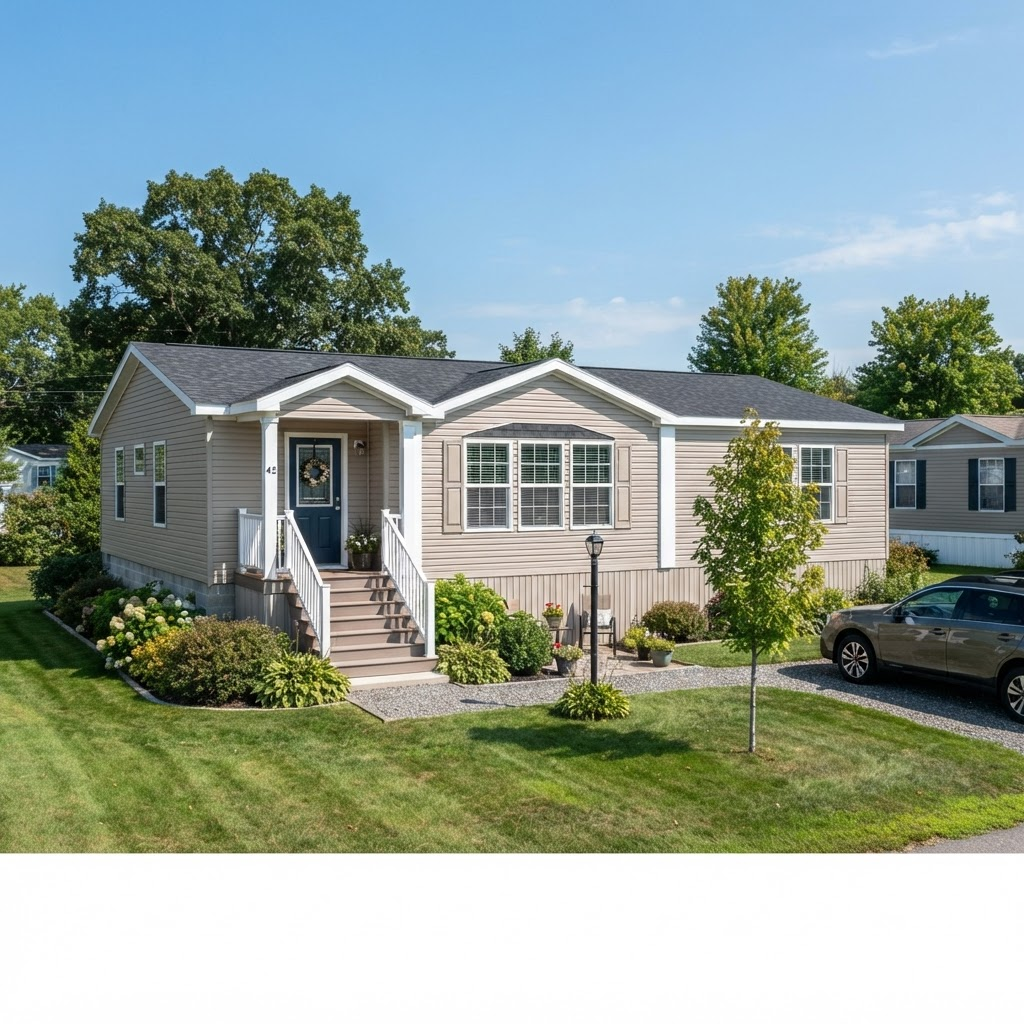
A double-wide is built as two separate sections, transported to the property, then joined together on-site. The long joint where they meet is called the marriage line or mate line. It usually runs through the floor, walls, ceiling, attic, and roof.
The joint is not simply a strip of molding. Both sections must be aligned, supported, sealed, and structurally connected. Large open rooms may also have load points along the marriage line that transfer weight to supports below. The federal manufactured home installation standards address final leveling, piers, footings, site drainage, and the interconnection of multi-section homes. The connection works properly only when both sections are supported as intended.
Signs the two sections are shifting
A single hairline crack does not prove that the home is shifting. Interior materials expand, contract, and settle. The concern grows when a crack returns after repair, gets wider, or appears with other changes in the same area. Here is what to watch for along the center of the home:
- A ridge, dip, or step in the floor across the marriage line. Flooring may split, lift, or wrinkle over the joint, while a broad slope points to support movement rather than a localized soft spot.
- Cracks that follow the center seam along the ceiling joint or top of an interior wall, especially a crack that repeatedly opens after filling or where one side of the seam sits higher than the other.
- Doors near the marriage line that suddenly rub, swing open, or will not latch, particularly when several alignment problems appear at the same time.
- Roof, fascia, or siding lines that no longer match. A newer offset, widening gap, or V-shaped separation between the sections suggests movement.
- Movement, squeaking, or air leakage along the joint, such as a draft at the floor or dust collecting in a new gap.
Why the two sections start to shift
The marriage line usually reveals movement. It is not always the source of it. Each section rests on its own chassis beams and support points. If a footing sinks, a pier leans, a shim compresses, or soil settles under one side, that half can drop or twist slightly while the other remains in place. The difference shows up at the center joint because that is where the sections meet.
Water is a frequent contributor. Poor drainage can soften or erode soil around footings, and a plumbing leak under the home can create a localized problem. Seasonal soil movement may also affect one part of the support grid more than another. Movement can also trace back to an older installation issue, such as a pier that is not carrying its intended load. The repair should begin with measurements and an under-home inspection, not assumptions.
Does the home need releveling or foundation repair?
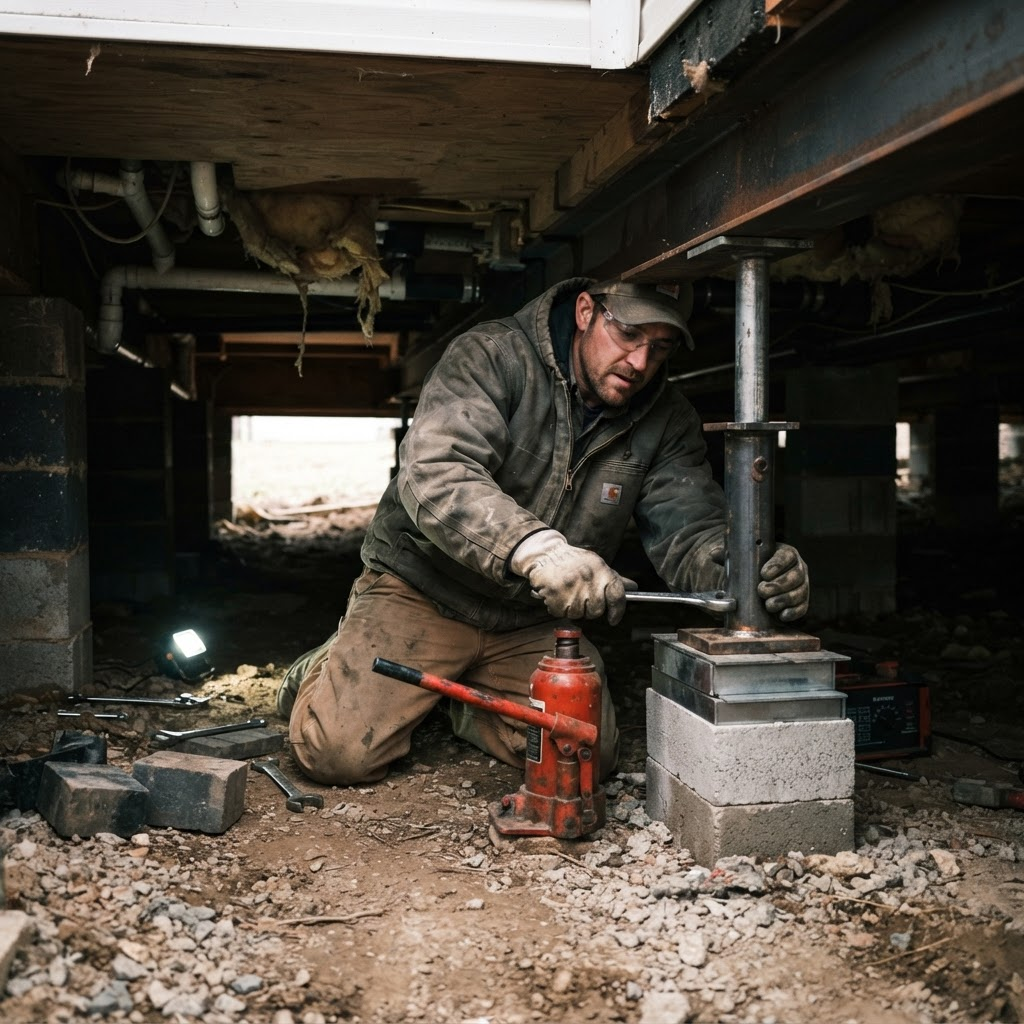
The answer depends on what has moved and why. Releveling is generally the right direction when the support system is still serviceable but the home has settled out of level. The technician maps high and low areas, adjusts the supports gradually, and checks both sections as one structure.
Foundation repair is different. It addresses damaged, leaning, undersized, or sinking support components, and a bad footing or failing pier must be corrected before the home can be expected to stay level. The marriage-line connection itself may also need repair after the underlying movement is corrected, but tightening or sealing the joint before stabilizing the home treats the visible result while leaving the cause in place.
What a proper inspection should check
A useful inspection looks beyond the crack. It should compare elevations across both sections and follow the marriage line from one end of the home to the other. The support review should include piers, footings, shims, visible frame areas, and load points near large marriage-wall openings, looking for leaning supports, soil disturbance, moisture, or loss of bearing.
Inside, floor slope, recurring cracks, sticking doors, and ceiling separation should be compared with the conditions below, and roof and fascia alignment may add another clue. An inspection is especially worthwhile when several symptoms appear together or previous cosmetic repairs have failed, because it separates a localized finish problem from a full-home leveling or foundation issue.
What you can document before the appointment
A little preparation makes the visit more useful, and there is one thing you should never do: attempt to jack one section into place yourself.
- Take clear photographs of the floor, ceiling, trim, and exterior seam, with a ruler beside visible gaps for scale.
- Note whether the change followed heavy rain, plumbing work, an earthquake, or another event.
- Test nearby doors and windows without forcing them, and record which ones rub or fail to latch.
- Note whether a floor height change continues into another room.
- Do not crawl beneath an unstable home or try to raise a section yourself, since lifting a double-wide unevenly can damage connections, plumbing crossovers, ducts, walls, and roof components.
Key Takeaway
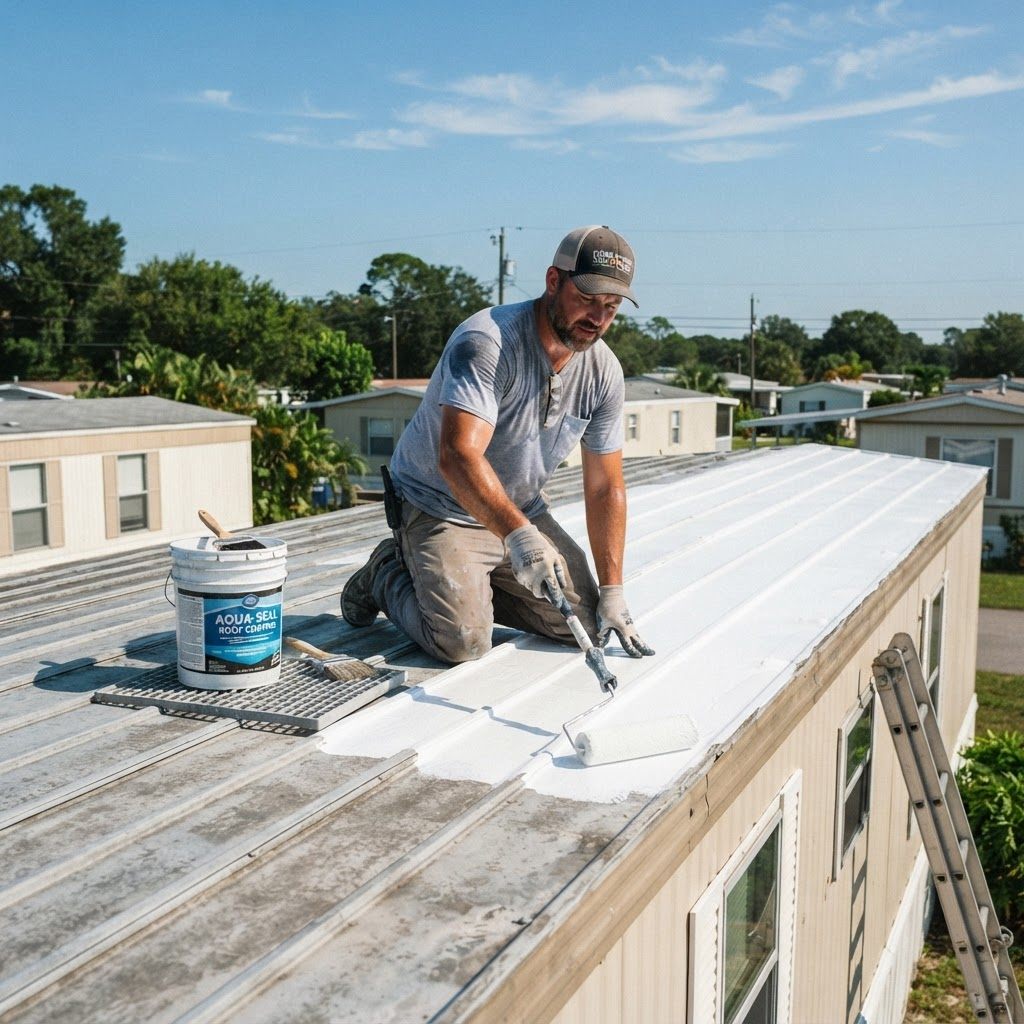
Paint, caulk, filler, and new trim make sense after the home is stable, but they are poor diagnostic tools. If the center crack returns, the floor stays uneven, or the exterior seam keeps opening, stop repeating the surface repair and have both sections checked for level, support condition, and alignment. Once the cause is corrected, the damaged finishes can be repaired without asking them to absorb ongoing movement.
Need foundation repair in Greater Sacramento?
We specialize in mobile and manufactured homes and diagnose the real cause before any work begins. Get a free, no-pressure estimate.