

Walk across a mobile home floor and feel it give a little, and the vinyl or laminate on top is almost never the real problem. Under most manufactured homes sits a layer of pressed particleboard subfloor, and that is what fails. It soaks up moisture, swells, and loses its grip until it turns spongy. Screwing new flooring over a bad subfloor just hides the damage for a few months.
Where soft spots show up, and why
Particleboard is stiff and strong when it is dry. Get it wet and it acts more like a stale cracker. That is why soft spots tend to appear in the same handful of places: in front of the kitchen sink, around the base of the toilet, along the edge of the tub, by exterior doors, and near the water heater or washer.
The water usually arrives slowly. A pinhole in a supply line, a failed wax ring under the toilet, a drain that weeps at a joint, condensation dripping off an uninsulated pipe, or a torn belly wrap letting humid air rise into the floor cavity. Because it spreads along the seams between subfloor sheets, a spot the size of a dinner plate this winter can be a section your foot goes through by next fall.
Find out how far the damage really goes
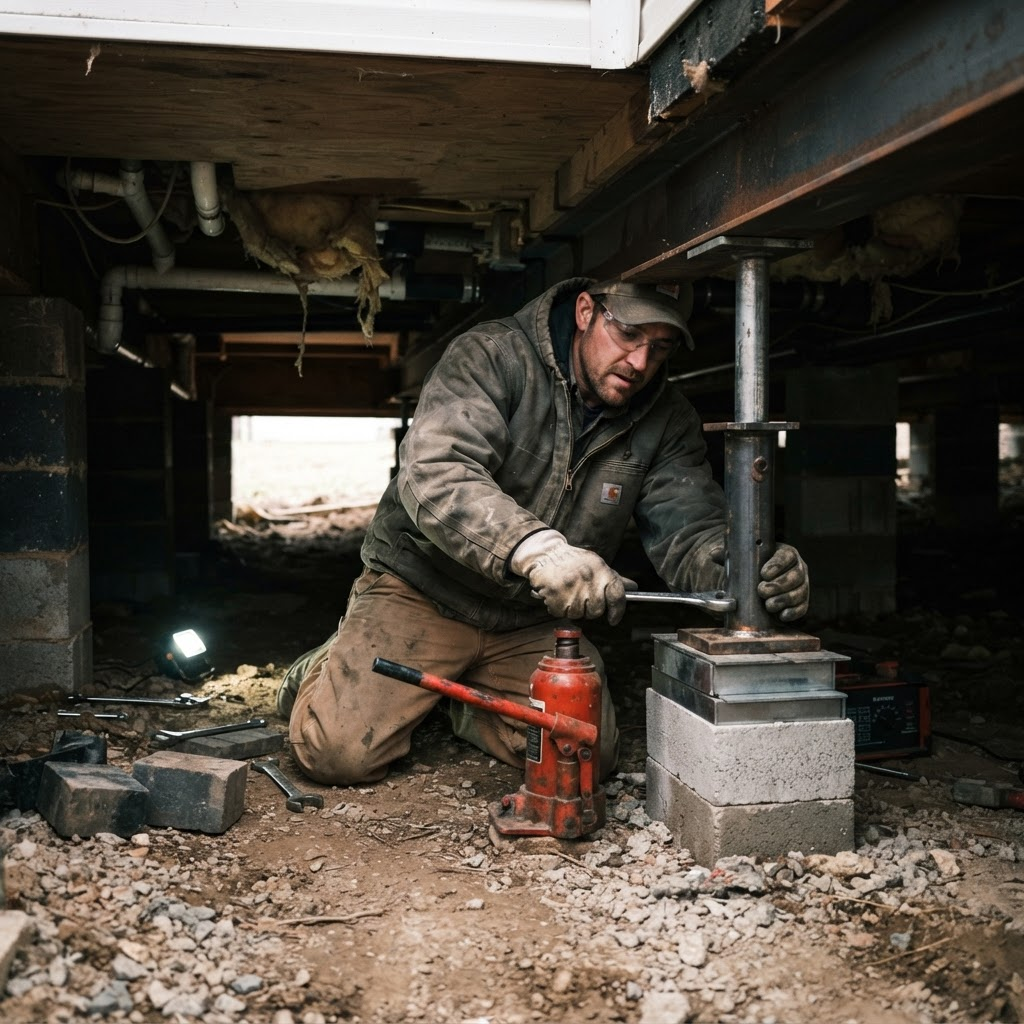
Press around the soft area with your weight on one foot. The firm edge you feel is rarely the true edge of the damage, because water wicks outward under the finished floor where you cannot see it. In a mobile home you often confirm the extent from below, opening the belly wrap to look for staining, black rot, or a musty smell in the insulation.
If the joist itself feels soft when you push a screwdriver into it, or you find mold, the repair is past cosmetic. At that point you are replacing structure, not just decking.
What a lasting repair involves
The order matters as much as the materials. Stop the water first, then rebuild.
- Find and stop the moisture source before any decking goes down.
- Cut the ruined particleboard back to solid, dry material, ideally to the center of a floor joist so the new piece has something to land on.
- Inspect the joists and sister in new framing anywhere the wood has softened.
- Lay new moisture-resistant tongue-and-groove subfloor and screw it to the joists rather than nailing, so it cannot work loose.
- Replace the wet insulation and reseal the belly wrap so the fix is protected from below.
Can you do it yourself?
A contained soft spot is a reasonable project if you are comfortable pulling flooring, cutting subfloor, and working around plumbing. Two things trip people up: the damage is usually bigger than it looks, and access from below through the belly wrap is awkward, dirty work.
If the soft area runs more than a couple of feet, sits over a plumbing line, or the whole room feels like it slopes, stop. A floor that sags across an entire room is usually a support or leveling problem under the home, and no amount of new decking fixes that.
Key Takeaway
A soft floor is a wet-subfloor problem, not a surface one. Kill the water source, cut the ruined particleboard back to solid joist, and screw down new tongue-and-groove decking. Skip that order and you will be back on your knees in the same spot next year.
Need subfloor repair in Greater Sacramento?
We specialize in mobile and manufactured homes and diagnose the real cause before any work begins. Get a free, no-pressure estimate.