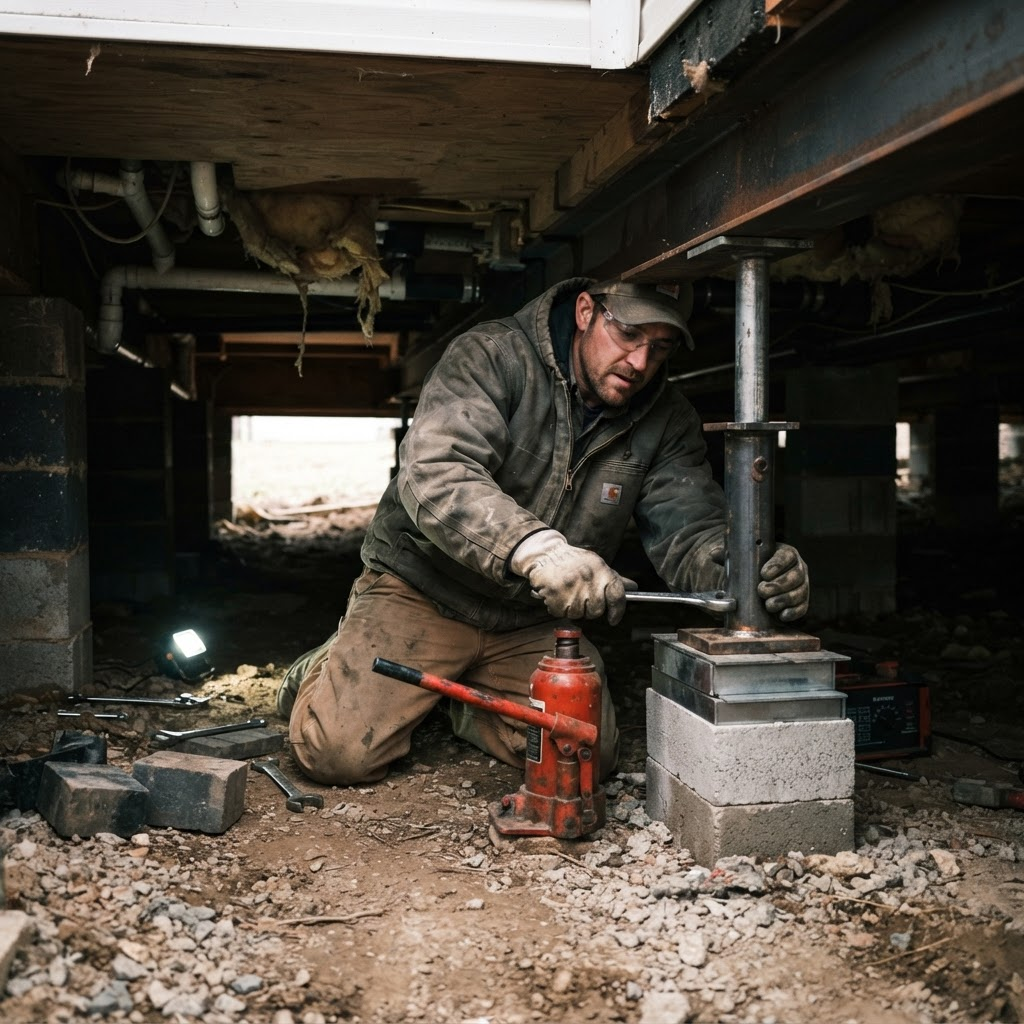
Mobile home releveling is usually the right repair when the home's support system is still sound but has settled unevenly. Foundation repair is needed when parts of that system, such as piers or footings, are damaged, sinking, leaning, or no longer carrying the home correctly. The symptoms overlap, so the real question isn't how uneven the floor feels. It's what is happening underneath it. The right starting point is an inspection of the full support system, not a guess based on a sticking door or a crack in the wall.
The difference between releveling and foundation repair
A manufactured home commonly rests on a system of footings, piers, caps, and shims that transfers the weight of the home into the ground. These parts work together. A footing spreads the load into the soil. A pier carries the load between that footing and the steel frame. Shims make the final height adjustments at the top.
The federal Model Manufactured Home Installation Standards address these parts as a connected foundation and support system. That matters because an uneven home doesn't automatically have a failed foundation. One or more supports may simply need adjustment. In other cases, leveling the home without correcting a damaged footing or pier would leave the underlying failure in place. Releveling corrects the position of the home; foundation repair corrects the damaged or inadequate parts supporting it.
What mobile home releveling corrects
Releveling brings the structure back into a consistent plane by measuring where the frame has dropped and adjusting the supports below it. The work may include resetting supports, correcting shims, and realigning areas that have settled at different rates.
Soil doesn't always settle evenly. Moisture changes, drainage problems, and gradual soil compaction can cause one section of a home to drop while the rest stays close to its original height. Even a small change beneath the frame can show up inside as a door that rubs, a floor that slopes, or a crack that returns after patching. Releveling is more likely to be the correct repair when:
- The home has gradually developed a slope or dip.
- Doors and windows stick, but the supports underneath remain intact.
- Gaps have opened where walls meet ceilings or trim.
- Piers are still stable and capable of carrying the load, but their height or position needs correction.
- The problem appears to be uneven settlement rather than broken support components.
When mobile home foundation repair is necessary
Foundation repair goes beyond adjustment. It addresses support components that are no longer stable enough to do their job. A footing may sink into weak or disturbed soil. A pier may crack, lean, shift off-center, or lose contact with the frame. Supports may be spaced poorly, deteriorated, or unable to carry the load in their current condition. In those cases, simply raising a low section and adding shims doesn't correct the reason it dropped. Foundation repair is more likely when an inspection finds:
- Cracked, leaning, or displaced piers.
- Footings that have sunk or no longer sit on stable bearing material.
- Supports that are loose or no longer carrying weight.
- Repeated movement after the home was previously releveled.
- A section of the frame that continues to sag because the support below it has failed.
- Visible instability under the home rather than a straightforward height difference.
Why the symptoms are easy to confuse
Both problems move the structure, so they often create the same clues indoors. A sticking door might mean one corner has settled and needs releveling. It could also mean a footing under that area is sinking. A wall crack may come from ordinary movement in an out-of-level home, but a crack that returns quickly after releveling deserves a closer look at the supports.
Uneven flooring creates another common mix-up. A whole room that slopes may point to the support system. One isolated soft spot near a toilet, sink, or exterior door is more likely damaged subfloor. Covering that spot with new flooring won't fix moisture-damaged decking, just as replacing the subfloor won't correct a frame that is out of level.
Can a mobile home need both repairs?
Yes. Releveling and foundation repair are separate services, but they are often parts of the same job. Suppose a footing has sunk and caused the pier above it to lean. The failed footing and unstable pier need to be corrected first. Once the support system is sound, the home can be brought back to level. Releveling without the foundation correction would place the home back on an unreliable base. This is why the sequence matters:
- Find the cause of the movement.
- Correct any failed support or footing.
- Relevel the full structure.
- Recheck doors, windows, and interior gaps after the frame is stable.
What a proper inspection should determine
A useful inspection should answer more than whether the home is level. It should identify why it moved and whether the existing support components are still serviceable. The inspector should look at the frame elevation across the home, the condition and position of the piers, how each pier bears on its footing, and whether any supports have lost contact or shifted. Moisture and drainage conditions under the home also deserve attention because ongoing water movement can continue affecting the soil and support system.
A structural and level check, floor and support review, and an examination of under-home systems give a broader view, which is useful because the symptom you notice indoors may not point directly to the repair you need. One exception is worth flagging: active water damage should be stopped promptly. A plumbing leak, damaged underbelly, or standing water beneath the home can worsen floor damage and soil conditions while you are arranging the structural inspection.
Key Takeaway
Choose releveling when the existing piers and footings are sound and the home needs measured support adjustments. Choose foundation repair when those components are failing, sinking, damaged, or unable to carry the home correctly. If both conditions are present, repair the support failure first and level the structure afterward. The safest decision starts under the home, so if floors are sloping, doors have stopped closing, or wall cracks keep returning, get an evaluation before spending money on interior patchwork.
Need mobile home releveling in Greater Sacramento?
We specialize in mobile and manufactured homes and diagnose the real cause before any work begins. Get a free, no-pressure estimate.